
Luxembourg
Partners in global health
General feature in an hospital in Uganda
Driving impact in health development cooperation and global health
WHO is proud to be a long-term recipient of financial and political support from Luxembourg, which allocates a third of its official development aid (ODA) to multilateral development organizations. Luxembourg is a firm and pragmatic founding member of the multilateral system. Since 2009, Luxembourg has allocated 1% of its gross national income to official development aid (ODA) every year, making it one of the very few countries that exceed the United Nations target of 0.7%.
WHO and Luxembourg work closely together across key global health priorities, which is a political priority of Luxembourg’s development cooperation strategy. Through its financial support, this collaboration is anchored in the 2025–2028 General Programme of Work (GPW 14), and addresses some main objectives among which universal health coverage; primary health care; preparedness and response to health emergencies; health financing; One Health; polio eradication; sexual and reproductive health and rights and tropical disease research.
Luxembourg is also a firm supporter of the increase in assessed contributions and has expressed its full and continuous support to this crucial process to strengthen WHO.

Dr Tedros Adhanom Ghebreyesus, WHO Director-General greets with Luxembourg's Martine Deprez, Minister of Health and Social Safety and Xavier Bettel, Deputy Prime Minister and Minister of Foreign and European Affairs, Cooperation and Foreign Trade.
Luxembourg was 6th largest thematic contributor to WHO in 2024–2025
Luxembourg has traditionally been a strong contributor of flexible funds, providing contributions that are vital for WHO to ensure that critical gaps in funding are filled and allow WHO to act quickly by allocating funds when and where they are needed. It is amongst the contributors to the Core Voluntary Contributions Account (CVCA) and was the sixth largest contributor of thematic contributions for 2024–2025.
Top thematic contributors to WHO (voluntary, core) for 2024–2025, US$ millions
/resource-mobilization-(crm)/engagement-established-government-contributors-(eeg)/top-thematic-contributors-to-who-2024-2025.jpg?sfvrsn=3ced404b_4 "Top thematic contributors to WHO 2024-2025")
Note: The amounts represent the revenue received by WHO for the period stated and might differ from the figures in the WHO Budget Portal, as the latter represents funds available net of Programme Support Costs.
Under the 2025–2028 WHO-Luxembourg Strategic Partnership Framework, Luxembourg provides respectively 22% of all funds as fully flexible (CVCA), and 23% of semi-flexible (thematic).
More about Luxembourg's support to WHO
Top technical areas of funding for the 2024–2025 Programme budget include:
- health emergencies, including preparedness and response;
- improved access to quality and affordable essential health services (PHC and UHC);
- health risk factors (NCD’s and CD’s);
- One Health;
- access to essential medicines, vaccines, diagnostics and devices for primary health care;
- reduced number of people suffering financial hardship (health financing);
- tropical disease research; and
- polio eradication.
Luxembourg’s development cooperation priorities
Luxembourg’s strategy in development cooperation and humanitarian aid is outlined in Luxembourg’s General Development Cooperation Strategy: The Road to 2030. It underlines Luxembourg’s commitment to the multilateral system in its development cooperation and humanitarian aid, by committing to the UN 2030 Agenda.
At the heart of Luxembourg’s international engagement is political conviction that the right to health is a fundamental human right. Luxembourg focuses its efforts on five key, interconnected priorities:
- improving access to quality and affordable basic social services with a strong focus on primary health care;
- strengthening resilient and equitable health systems built on universal health coverage and primary health care;
- enhancing the socio-economic integration of women, children and youth;
- promoting inclusive and sustainable economic growth where health is an investment not a cost; and
- strengthening inclusive governance and a strong, interconnected global health architecture.
In its role of “institutional lead”, Luxembourg participated in the 6th MOPAN assessment of WHO in 2023–2024.

Maskaneh Health Centre in rural Aleppo, Syria. The facility delivers primary health care services through a WHO-supported implementing partner, ensuring access to essential care for communities in hard-to-reach areas.
Champions of universal health coverage
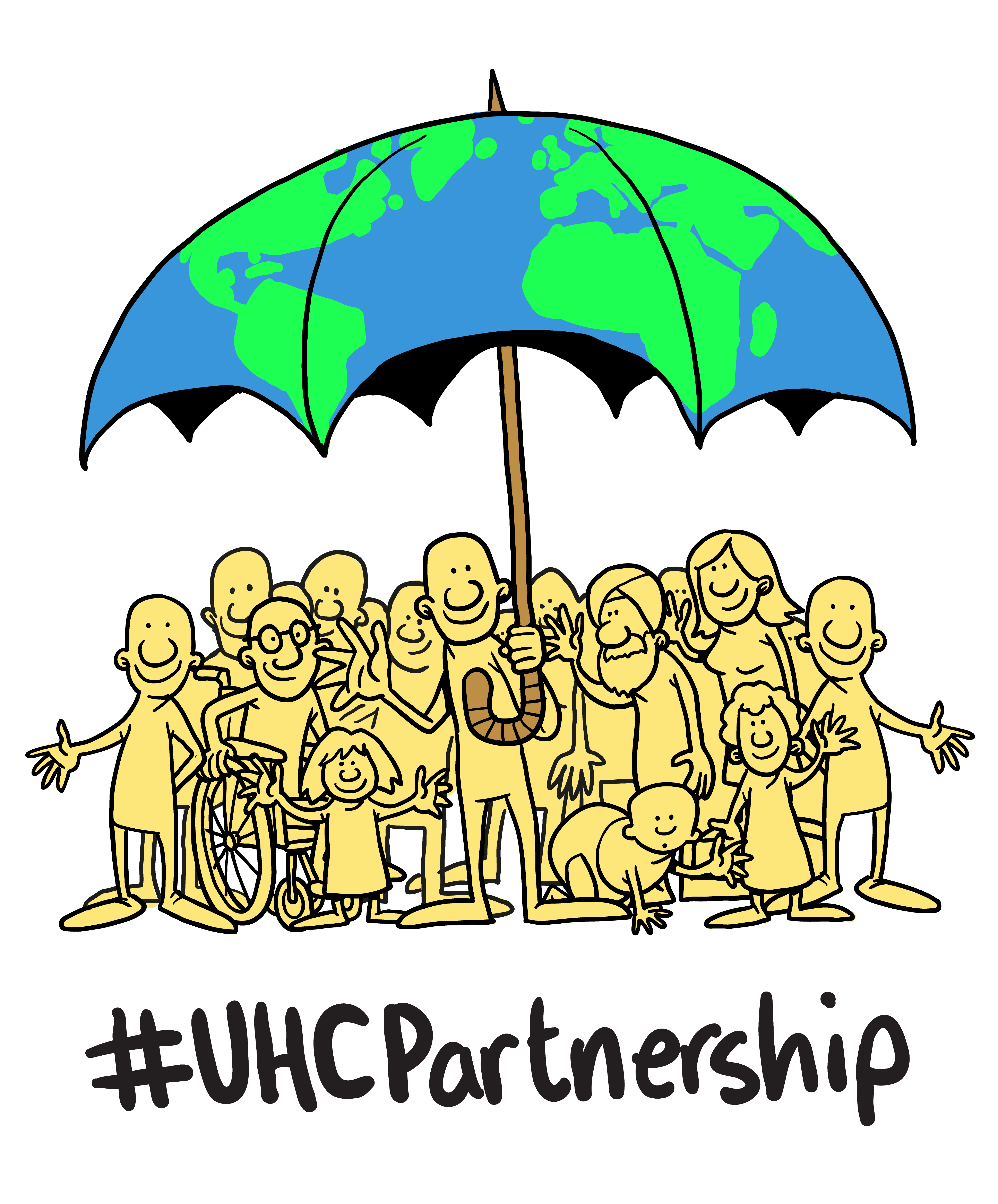
Luxembourg is one of the founding members of the Universal Health Coverage Partnership, which was established following World Health Assembly resolution 64.8 on strengthening national policy dialogue to build more robust health policies, strategies and plans. This resolution underpins WHO guidance on National Health Policies, Strategies and Plans, which are central to advancing universal health coverage (UHC).
A long-standing and highly valued partner of WHO, Luxembourg has played an important role in advancing UHC through stronger, more resilient health systems grounded in a primary health care approach. Since 2013, Luxembourg has contributed €28.8 million to the UHC Partnership. It has further committed €16 million over 2025–2028 through a four-year grant to support Phase V, reaffirming its leadership and continued commitment to equitable access to essential health services globally.
Luxembourg’s contribution to the UHC Partnership
Through its support to the UHC Partnership, Luxembourg contributes to country-led health system reforms by strengthening governance and policy dialogue across key areas, including strategic planning, health financing and financial protection, workforce development, service delivery, digital health, access to medicines and health products, and integration of priority programmes through primary health care. Its support also contributes to emergency preparedness and essential public health functions.
The achievement of universal health coverage is an overarching goal of Luxembourg’s health strategy. Through the Partnership, it supports six partner countries in two regions: Burkina Faso, Cabo Verde, Lao People’s Democratic Republic, Mali, Niger and Senegal. Support to these countries continues under Phase V (2025–2028).
2025: Transition from Phase IV to Phase V
In 2025, the UHC Partnership transitioned from Phase IV (2019–2025) to Phase V (2025–2028), ensuring continuity of support to strengthen PHC-oriented health systems and advance universal health coverage.
During Phase IV, Luxembourg-supported countries made progress across key health system functions, including national health policy and planning, workforce development, access to medicines, financing reforms, performance assessment and quality of care, while maintaining essential services during emergencies such as COVID-19.
Under Phase V, support will continue in priority countries and expand catalytic engagement to a broader set of countries to advance reforms aligned with national health strategies.
Enabling quick action to save lives
Supporting acute emergency response operations
The WHO Health Emergencies Programme (WHE) supports countries and partners to prepare for, prevent, respond to and recover from health emergencies caused by all hazards, including natural and human-made disasters, disease outbreaks and conflicts.
Luxembourg’s funding has contributed to strengthening core capacities to detect disease outbreaks, develop standards for managing high-threat pathogens, respond to crises in affected countries, and enhance preparedness at national level.
In 2024–2025, Luxembourg contributed US$ 5.5 million to WHO’s emergency work, the majority provided as base programme funding. In 2024, it also supported the WHO Mpox Appeal with €500 000.
On 12 March 2026, WHO and Luxembourg’s Ministry of Foreign and European Affairs, Defence, Development Cooperation and Foreign Trade signed a Standby Partnership agreement. This partnership enables the rapid deployment of trained personnel and equipment to emergency settings. It also includes joint training activities, further strengthening preparedness and operational effectiveness in humanitarian responses.

Standby Partners Strengthen Outbreak Response in WHO-Supported Training, Brindisi, Italy, 15–17April 2025
/resource-mobilization-(crm)/engagement-established-government-contributors-(eeg)/first-global-peer-review-of-the-universal-health-and-preparedness-review.tmb-1920v.jpg?sfvrsn=39238cdd_1 "First global peer review of the Universal Health and Preparedness Review")
H.E. Martine Deprez, Minister of Health and Social Security of Luxembourg, speaking at the first pilot global peer review of the Universal Health and Preparedness Review (UHPR), at WHO headquarters in Geneva, Switzerland, on 13–14 February 2024.
Participation in the Universal Health Preparedness Review (UHPR)
In November 2024, Luxembourg participated in the Universal Health and Preparedness Review (UHPR), a voluntary WHO initiative, launching its national review in collaboration with senior representatives from WHO headquarters, the European Commission and the WHO Regional Office for Europe.
The UHPR enables participating countries to assess their preparedness capacities, draw lessons from past crises – including the COVID-19 pandemic – and identify areas for improvement. It reflects the understanding that preparedness is a shared responsibility that transcends borders, sectors and income levels.
The review aligns closely with Luxembourg’s National Resilience Strategy, which focuses on strengthening the health system, ensuring continuity of care in crises, securing essential medical supplies, and improving coordination across public, private, civilian and military actors. By reinforcing these efforts, the UHPR provides a more comprehensive assessment of national capacities and contributes to enhancing Luxembourg’s resilience to future health emergencies.
Eradicating polio
Luxembourg is a valued partner of the Global Polio Eradication Initiative (GPEI), providing decades of steadfast political and financial support that has been instrumental in advancing global polio eradication. Since the launch of the eradication effort in 1988, global polio incidence has declined by 99.9%, bringing the world closer than ever to a polio-free future.
Luxembourg has committed approximately US$ 27 million to GPEI through 2028 in support of polio eradication activities. This sustained investment reflects Luxembourg’s strong commitment to protecting every child from poliovirus.
The goal of the GPEI is to stop transmission of all poliovirus types and ensure that no child is permanently paralyzed by polio again. Luxembourg’s flexible funding is particularly impactful, enabling WHO to direct resources to the most urgent outbreaks, operational gaps and high-risk geographies. This support ensures the rapid rollout of vaccination campaigns, strengthened surveillance systems and effective emergency response where needs are greatest.
In 2022 and 2023, Luxembourg, represented by its Permanent Representative in Geneva, co-hosted the Polio Partners Group (PPG) of the GPEI.
Global Citizens call on world leaders to end polio
Building local research solutions
Luxembourg is a long-standing core contributor to TDR, the Special Programme for Research and Training in Tropical Diseases – a global platform that advances research and drives innovation to tackle diseases of poverty.
From 2020 to 2023, Luxembourg co-chaired TDR, reinforcing its leadership in shaping global health research priorities. Through targeted project funding, it also supports research capacity strengthening in sub-Saharan Africa, addressing the needs of francophone researchers and health professionals and enabling locally driven solutions.
This investment in research capacity strengthens the resilience of health systems and equips countries to generate evidence, inform policy and accelerate innovations that improve health outcomes where they are most needed.
In 2024–2025, Luxembourg contributed approximately US$ 900 000 to TDR.
WHO Collaborating Centre: Luxembourg Institute of Health
WHO collaborates with the Luxembourg Institute of Health (LIH)’s Clinical and Applied Virology unit, which was designated in 2022 as a WHO Collaborating Centre for Reference and Research on Measles and Rubella Infections. In addition to this role, the laboratory serves as Luxembourg’s national reference laboratory and is one of three WHO European regional reference laboratories within the measles and rubella laboratory network.
Through this collaboration, LIH supports surveillance and elimination efforts by monitoring genetic changes in measles virus strains, strengthening laboratory diagnosis, and developing and optimizing laboratory techniques. It also provides expertise, training and quality assurance to national laboratories across its constituency, supporting countries in detecting and characterizing circulating measles and rubella viruses.
As part of WHO’s global laboratory network, this work contributes to robust, case-based surveillance and helps track transmission patterns, assess outbreaks and monitor progress towards measles and rubella elimination.