
UNODC/WHO
Programme on Drug Dependence Treatment and Care

The Joint UNODC-WHO Programme on Drug Dependence Treatment and Care is a collaboration between UNODC and WHO to support the development of comprehensive, integrated health-based approaches to drug policies that can reduce demand for illicit substances, relieve suffering and decrease drug-related harm to individuals, families, communities and societies.
- The promotion and support worldwide (with a particular focus on low- and middle-income countries) of evidence-based policies, strategies and interventions that are based on a public health and human rights approach, in order to reduce drug use and the health and social burden it causes.
- The widespread recognition of drug dependence as a preventable and treatable multifactorial health disorder, and recognition of the social advantages of investing in treatment, such as lowering health-related costs, improving security and contributing to social cohesion and development.
- Drug dependence treatment should become a part of the mainstream health care and social welfare system, without discrimination with respect to other chronic general and mental health disorders. Nothing less than what is provided for other diseases.
- The investment in comprehensive and results-oriented
programmes for drug dependence treatment and care, particularly community-based interventions, including the
skill set of their human resources.
Our work
Joint publications
The International Standards for the Treatment of Drug Use Disorders was prepared by World Health Organization (WHO) and United Nations Office on...

The first edition was published in 2013 and summarized the evidence of drug use prevention at the global level. The value of the first edition was widely...

Treatment and care for people with drug use disorders in contact with the criminal justice system: alternatives...
The publication was invited by resolution 58/5 of the Commission on Narcotic Drugs entitled “Supporting the collaboration of public health and justice...

Good Policy and Practice in Health Education: Education sector responses to the use of alcohol, tobacco...
Joint UNESCO, UNODC and WHO publication on education sector responses to substance use in 2017 UNESCO (the United Nations Educational, Scientific and Cultural...

Book of abstracts: Scientific Consultation on Prevention of Drug Use and Treatment of Drug Use Disorders,...
The aim of the Scientific Consultation on Prevention of Drug Use and Treatment of Drug Use Disorders was to promote the scientific understanding of evidence-based...

Women who inject drugs and HIV
To date, inadequate attention has been given to rectifying gender inequalities in harm reduction programming. Strategies and policies are urgently needed...

Opioids are potent respiratory depressants, and overdose is a leading cause of death among people who use them. Worldwide, an estimated 69 000 people...
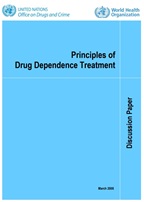
Principles of Drug Dependence Treatment
This discussion paper, a joint UNODC-WHO document, aims to encourage governments and other partners to take concerted action for the implementation of...

Key documents
Multimedia

Feature story
Related health topics